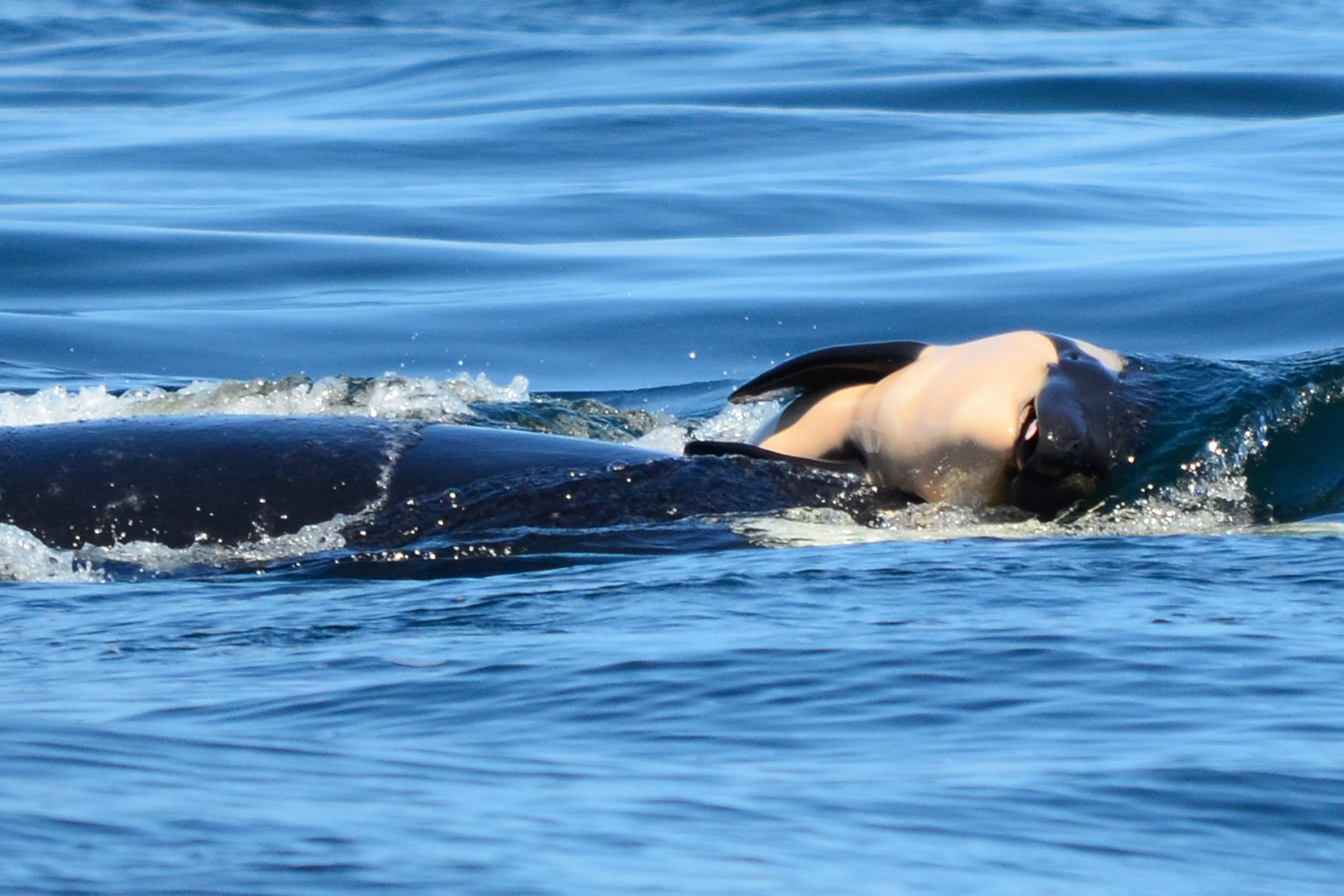
San Juan Islands, Washington — In a heartbreaking display of maternal grief, a female orca off the coast of Washington state has been seen carrying the body of her dead calf for more than three days, refusing to let it sink beneath the waves. Marine biologists following the pod say the whale’s behavior offers a rare and emotional glimpse into the deep social bonds within orca families.
The orca, known as J35 or “Tahlequah,” gave birth to the calf earlier this week, but the newborn died shortly after delivery. Since then, observers have watched the mother repeatedly nudge and lift the lifeless body to the surface, balancing it on her forehead as she travels with her pod through the Salish Sea.
“She’s just not letting go,” said one researcher from the Center for Whale Research. “We’ve seen orcas mourn before, but this level of persistence is extraordinary. It’s a profound expression of attachment.”
The J pod, part of the endangered Southern Resident killer whale population, has faced steep declines in recent years due to a lack of chinook salmon — their primary food source — and increasing environmental stress from ship noise and pollution. The death of the calf marks another devastating loss for a population that has struggled to produce viable offspring.
Scientists say such mourning behavior highlights the emotional intelligence of orcas, whose complex social structures and strong familial ties rival those of elephants and primates. While the mother’s actions are likely driven by instinct and emotion, they also serve as a stark reminder of the challenges facing her species.
As of Thursday, researchers reported that J35 was still carrying her calf, swimming slowly but steadily alongside her pod. The sight, both tragic and awe-inspiring, has moved scientists and the public alike — a testament to the enduring bonds of life, even in loss.