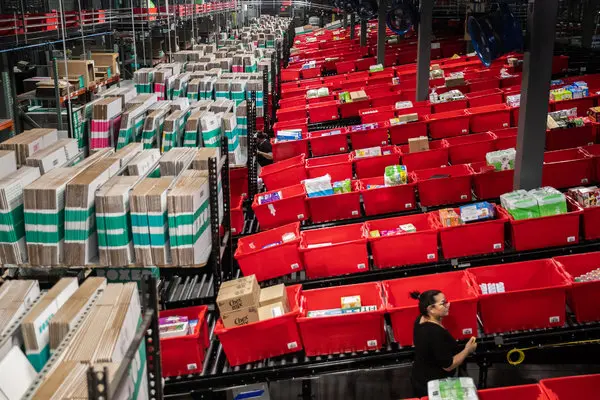
Seattle — A year after Amazon’s bold entry into the grocery business, competitors across the retail landscape are scrambling to keep pace — and their strategy increasingly involves buying up innovative start-ups to modernize operations.
The e-commerce giant’s acquisition of Whole Foods not only shook the supermarket industry but also accelerated a wave of investment in technology-driven food retail. Traditional grocers, once slow to change, are now racing to integrate digital tools, delivery platforms, and customer analytics to remain competitive in an era defined by convenience and speed.
Companies such as Walmart, Kroger, and Albertsons have all poured money into partnerships or acquisitions aimed at improving everything from last-mile logistics to personalized shopping experiences. Smaller chains, too, are turning to start-ups that specialize in automation, supply-chain optimization, and predictive inventory management — technologies that were once considered optional but are now viewed as essential for survival.
Analysts say Amazon’s influence goes beyond pricing or online dominance. The company’s data-driven model has redefined customer expectations, forcing rivals to adopt similar approaches or risk falling behind. “Amazon didn’t just change how people shop,” said one retail strategist. “It changed what shoppers expect — seamless digital access, real-time delivery, and transparency in pricing.”
Start-ups are benefiting from this shift, attracting record levels of funding from grocery chains eager to modernize quickly. Many of these young firms are being acquired outright to give traditional retailers access to advanced software and automation capabilities that would take years to build internally.
Still, experts warn that not every grocer will be able to keep up. The rapid pace of technological adoption comes with high costs and complex integration challenges, particularly for legacy players with outdated infrastructure.
Amazon, meanwhile, continues to expand its footprint, testing cashierless stores, expanding grocery delivery, and refining the hybrid online-offline model that sparked the current transformation. Its rivals may be investing heavily in innovation, but Amazon’s head start — and its unmatched scale — ensure that the ripple effects it set off will continue to shape the grocery industry for years to come.