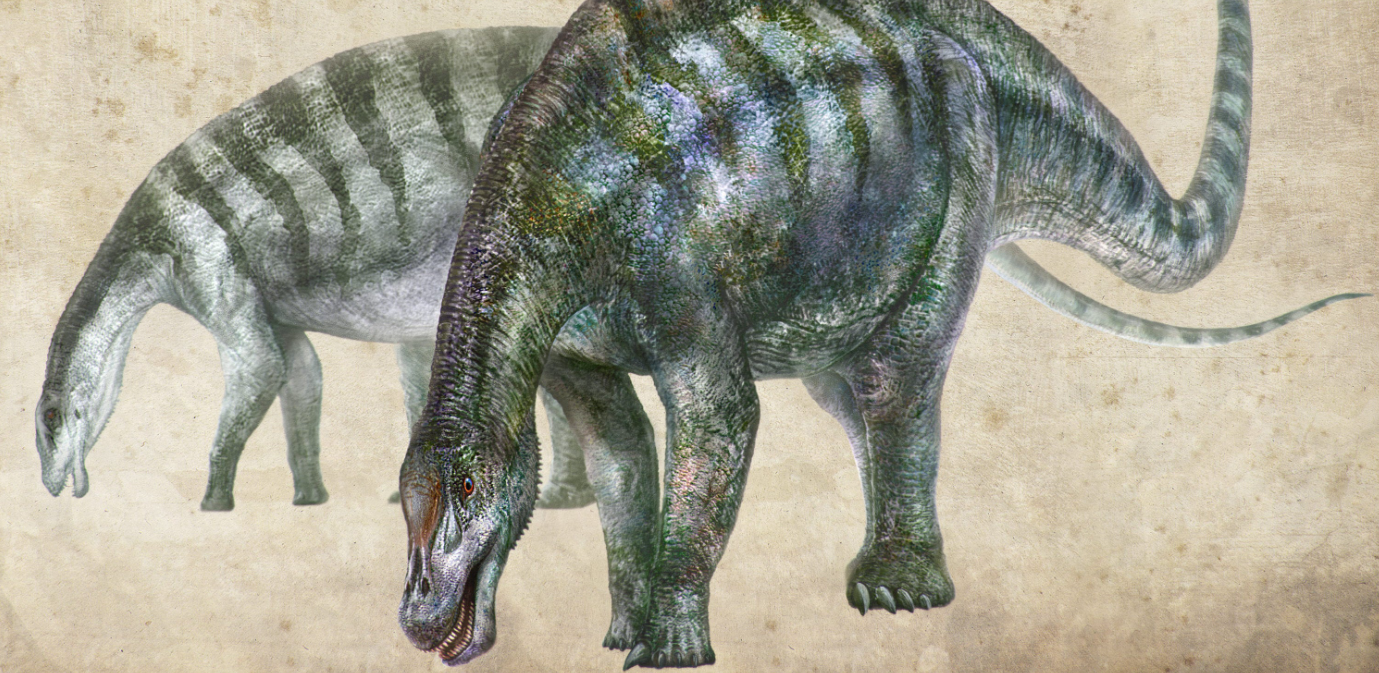
Beijing — Paleontologists in China have uncovered a new species of giant dinosaur nicknamed the “Amazing Dragon,” a discovery that scientists say is transforming the understanding of how the largest creatures on Earth evolved. The species, officially named Lingwulong shenqi, lived approximately 174 million years ago during the Middle Jurassic period, making it one of the earliest known members of the long-necked sauropod group.
The fossil remains were found in northwestern China’s Ningxia region and include several vertebrae and rib bones preserved in remarkable condition. Researchers say Lingwulong belonged to a lineage previously believed to have emerged millions of years later, suggesting that advanced sauropods spread across the globe far earlier than scientists had thought.
Dr. Xu Xing, a leading paleontologist with the Chinese Academy of Sciences, said the discovery challenges long-held theories about dinosaur evolution. “We used to think that this type of sauropod only appeared after the breakup of the supercontinent Pangaea,” Xu explained. “But this find shows they were already diversifying much earlier — and reaching regions we never expected.”
The “Amazing Dragon” measured more than 50 feet long and likely lived in a lush, river-fed environment filled with vegetation. Its long neck and massive body resemble those of later giants like Diplodocus and Apatosaurus, indicating that the evolutionary adaptations for size and feeding efficiency were already well developed at that time.
The discovery provides new insight into how sauropods evolved and migrated, offering evidence that global dinosaur dispersal may have occurred in multiple waves rather than a single expansion event.
For China, the find adds to a growing list of world-class dinosaur discoveries that continue to reshape the prehistoric record. As researchers prepare further studies of the fossils, the “Amazing Dragon” stands as a reminder that the story of dinosaur evolution is still being written — and that some of its most important chapters may lie buried beneath the ancient soils of Asia.