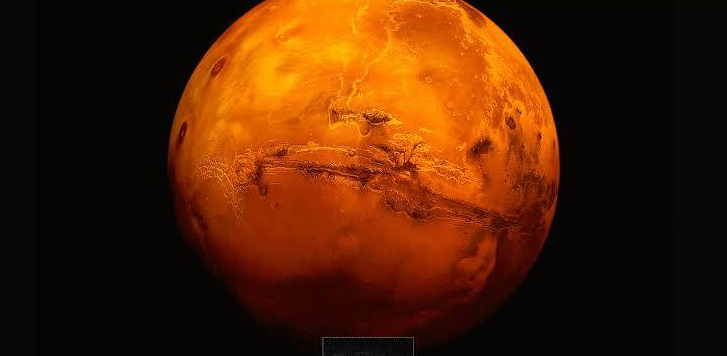
Rome — Scientists have discovered evidence of a large, stable body of liquid water buried beneath the surface of Mars, a breakthrough that could reshape the search for extraterrestrial life. The finding marks the first time researchers have identified what appears to be a persistent lake of liquid water on the Red Planet.
The discovery was made using data from the European Space Agency’s Mars Express orbiter, which employed radar signals to penetrate the planet’s icy south polar cap. By analyzing three years of radar reflections, scientists detected a bright, consistent echo beneath a layer of frozen carbon dioxide and dust — a signature consistent with liquid water.
The lake is believed to be roughly 20 kilometers (12 miles) wide and located about 1.5 kilometers (nearly a mile) below the surface. While the temperature there is well below freezing, researchers say the presence of salts in the Martian soil could allow the water to remain in liquid form.
Dr. Roberto Orosei, who led the research, said the find represents a major step forward in understanding Mars’ hydrological history. “This is not a small trickle or temporary melt,” he explained. “It’s a body of water that has likely existed for a long time — a potential habitat for microbial life.”
The discovery has revived scientific excitement about the possibility of life on Mars, past or present. While conditions on the surface remain hostile, underground reservoirs like this one could provide protection from radiation and temperature extremes, creating niches where life might survive.
NASA and the European Space Agency are expected to focus future missions on studying Mars’ polar regions and subsurface layers. Instruments capable of drilling or penetrating deep below the surface may one day confirm whether this hidden Martian lake holds the most sought-after discovery of all — evidence that life exists beyond Earth.