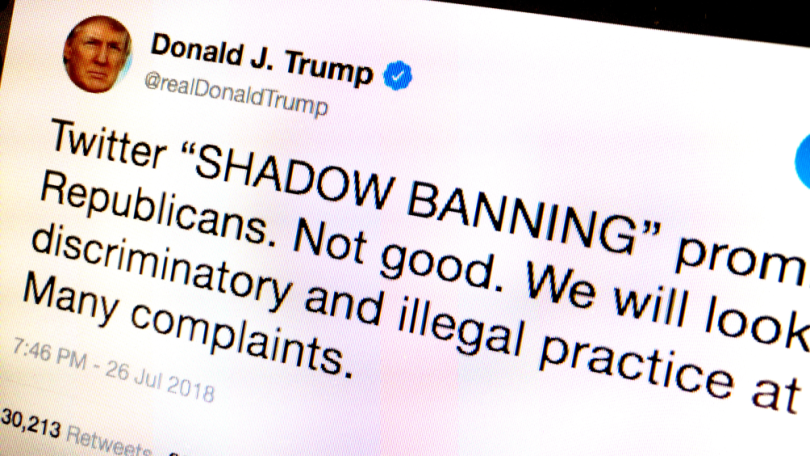
San Francisco — The term “shadow ban” has become a flashpoint in political and tech circles, sparking accusations that social media platforms are secretly silencing certain voices, particularly conservative ones. But what exactly does it mean, and is there any truth to claims that Twitter has used it to suppress Republican accounts?
A “shadow ban” refers to the practice of limiting a user’s visibility on a platform without notifying them. In theory, a person can still post content, but their tweets or comments are quietly hidden from search results, trending lists, or other users’ feeds. The idea gained traction among conservatives who say their engagement dropped sharply without explanation.
Twitter has consistently denied that it deliberately targets users based on political affiliation. The company acknowledges, however, that its algorithms sometimes reduce the visibility of accounts deemed to be violating rules or behaving inauthentically — for example, by spamming or coordinating harmful activity. These automated moderation systems can inadvertently flag legitimate users, creating the appearance of bias.
The controversy escalated after several prominent Republicans, including members of Congress, complained that their profiles were harder to find in Twitter’s search bar. Twitter later said the issue was a technical bug, not political censorship, and quickly adjusted its ranking system to correct the problem.
Experts say the debate highlights the difficulty of moderating massive social platforms where billions of posts are filtered by algorithms rather than humans. While there is little concrete evidence of partisan targeting, the opacity of these systems has fueled mistrust among users who feel they are being treated unfairly.
The company has since pledged greater transparency, publishing more information about how tweets are ranked and how enforcement actions are determined. Still, questions remain about who gets caught in the filters and why.
For many users, “shadow banning” has become shorthand for a broader concern: that social media platforms hold immense, largely unaccountable power over public discourse. Whether or not the practice truly exists in the political sense, the perception that it does continues to shape how people see — or don’t see — what’s happening online.